


Blog
03 Nov,2026


How to Choose Durable Porcelain for High-Volume Foodservice
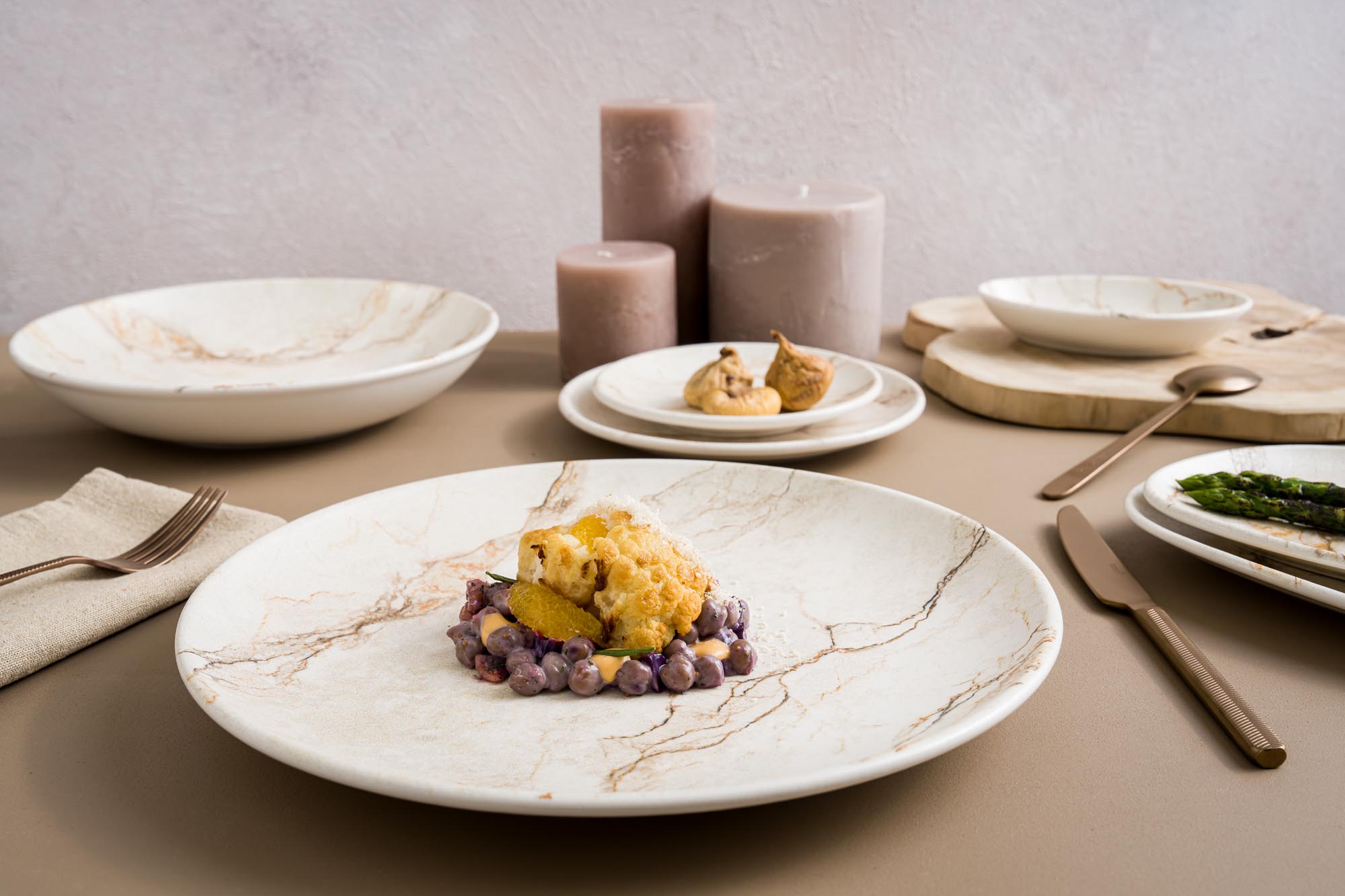
Porcelain used in hotels, restaurants, and cafés moves continuously between the kitchen, service area, dining table, and dishwashing station. Handling, washing, storage, and repeated use expose tableware to far more demanding conditions than those encountered in domestic environments.
When choosing porcelain for high-volume foodservice, edge strength, surface performance, form, weight, suitability for commercial dishwashing, and warranty coverage should be evaluated together. The right choice helps maintain service standards, reduce product loss, and manage operating costs more effectively.
What Is Expected from Porcelain in Professional Foodservice?
In a professional kitchen, a plate may be used several times throughout the day. This cycle becomes even more intensive in banqueting, buffet service, room service, and high-cover à la carte operations.
Edge chipping, metal marking, surface dulling, color loss, and impacts during handling can all affect the service life of tableware. Improper storage or forceful contact between pieces may also increase the risk of damage.
Durability should therefore not be considered solely in terms of resistance to breakage. The ability of porcelain to preserve its surface, form, and visual appeal over time is also an essential part of professional performance.
Why Is Edge Strength Important in Porcelain?
The rim is one of the areas most vulnerable to damage. Repeated impacts can occur when plates are cleared from tables, placed in warewashing racks, or stored on shelves.
A rim designed for professional foodservice can help reduce product loss. Even fine and elegant forms must deliver the strength required for intensive daily use. For this reason, both rim construction and impact performance should be considered alongside appearance.
Bonna offers a Lifetime Edge Chip Warranty on selected products. Before purchasing, operators should confirm whether the chosen product is covered and review the applicable warranty terms.
How Should the Surface Resistance of Porcelain Be Evaluated?
Plate surfaces come into constant contact with metal cutlery, frequent washing cycles, and different types of food. Over time, visible marks can affect both the appearance of the dish and the presentation standards of the establishment.
Porcelain should therefore be assessed not only by how it looks when new, but also by how well it preserves that appearance throughout repeated service cycles. Maintaining color, pattern, and surface texture helps ensure a consistent perception of quality at the table.
Surface design and surface resistance should be assessed separately. Bonna’s FUSIONtech technology combines matte and glossy surfaces in the same product.
Choosing the right porcelain should also be supported by appropriate handling and care. Even a highly durable surface must be used in line with the recommended washing, handling, and storage practices.
How Should Plate Shapes Be Selected for Different Dishes?
Plate shape should be selected according to the type of dish, portion size, and service style. A form that does not suit its intended use can restrict plating possibilities and make service more difficult for the team.
Deep plates can provide greater control when presenting dishes with sauces. Flat plates offer a balanced plating area for main courses, while oval and rectangular pieces can support sharing-style presentations. In buffet service, forms suited to the portioning system may help maintain an efficient flow. Breakfast service may require complementary pieces that accommodate different menu components while creating a coordinated table setting.
Dimensions are just as important as form. Oversized plates may take up unnecessary space on shelves and worktops or slow down handling. Plates that are too small can make portions look crowded and limit the chef’s presentation options.
Plate shape should therefore be determined by considering the menu, portioning, handling, and storage conditions together.
How Does Plate Weight Affect Service?
In professional foodservice, plates are often carried in multiples rather than individually. Their weight, grip, and stability on trays can therefore have a direct impact on the service team’s movements.
An unnecessarily heavy product may become difficult to handle during peak service. An unbalanced form may not feel secure when carried. This becomes particularly important in banqueting and high-cover restaurants, where several plates may need to be carried at the same time.
Weight should not be evaluated solely by looking at the product specification. The plate should also be assessed when fully plated, while being placed on the table, and during clearing.
How Do Commercial Dishwashing Conditions Affect Porcelain?
In professional establishments, plates must be prepared for reuse within a short period. Frequent washing cycles, unsuitable chemicals, or incorrect loading can affect both surface and edge performance.
When choosing porcelain, operators should review its suitability for commercial dishwashers and follow the relevant care instructions. Wash temperatures, detergents, and rinse aids should be compatible with the product’s specifications. Plates should also be positioned securely in warewashing racks to minimise forceful contact between pieces.
Product strength and operational practices complement one another. Correct care helps porcelain retain its visual quality and performance for longer.
How Is the True Cost of Porcelain Calculated?
The true cost of professional porcelain is not limited to its initial purchase price. Service life, replacement frequency, product availability, and warranty coverage all contribute to the total cost of ownership.
A product that initially appears more economical may create higher long-term costs if it requires frequent replacement. If missing or damaged pieces cannot be reordered, the visual consistency of the table setting may be disrupted, potentially leading to the replacement of an entire collection.
Operators should therefore consider how well the product maintains its appearance under high-volume service, whether individual pieces will remain available, and what the warranty covers. Long-lasting products support more controlled inventory management while helping establishments maintain consistent service standards.
Can Aesthetics and Durability Be Combined?
Yes. Choosing porcelain for professional use does not mean compromising on table presentation. Color, pattern, texture, and form can be planned alongside the operational requirements of the establishment.
Dark surfaces can create a strong contrast with lighter dishes. Earth tones can highlight the natural qualities of ingredients, while patterned collections can bring the restaurant’s culinary identity to the table. The plate should not compete with the food; it should create a complementary frame for the presentation.
With a broad range of colors, textures, and forms, Bonna collections bring chefs’ creative vision together with the practical needs of professional foodservice. This balance makes it possible to build a consistent tableware concept that combines aesthetics and functionality.
How Should a Sample Test Be Conducted Before Purchasing?
A sample test is one of the most effective ways to determine whether a product is suitable for an establishment’s daily workflow. The assessment should not be limited to the chef’s opinion. Service, stewarding, F&B, and purchasing teams should also be involved.
During the test, operators should assess how the portion sits on the plate, whether the product remains balanced when fully plated, and how comfortably it can be handled by the service team. Its stability on trays and service trolleys should also be observed.
Compatibility with existing shelves, storage areas, and warewashing racks should be checked. The sample should be put through several washing cycles to observe whether any marks, dulling, or visible changes occur on the surface.
A plate may be aesthetically appealing, but if it does not fit the kitchen, service, and warewashing workflow, it may not be the right choice for the operation. Sample testing brings design expectations and daily operating conditions into the same decision-making process.
Does Porcelain Selection Vary by Establishment Type?
Yes. The service model directly affects what an establishment expects from its tableware. In fine-dining restaurants, refined forms, surfaces that enhance the presentation, and visual harmony across the collection may take priority. In high-cover restaurants, ease of handling, edge strength, and compatibility with repeated service cycles become particularly important.
Hotels may require a broad range of products to meet the different needs of breakfast, banqueting, room service, and à la carte dining. In cafés, cups, saucers, dessert plates, and complementary serving pieces are expected to create both visual and functional consistency.
Purchasing decisions should therefore be based not only on the menu but also on the establishment’s different outlets, service formats, and usage intensity.
Porcelain Selection Checklist for High-Volume Foodservice
Before making a purchasing decision, consider the following criteria:
- Edge and impact strength
- Surface performance under intensive use
- Suitability for commercial dishwashing
- Forms compatible with the menu and portion sizes
- Appropriate weight and balance for the service team
- Compatibility with shelving, storage, and warewashing systems
- Product variety within the collection
- Availability of replacement pieces
- Warranty coverage and applicable terms
- Long-term cost of ownership
Frequently Asked Questions About Durable Porcelain
What is the most durable porcelain for restaurants?
There is no single product that is the most durable choice for every establishment. The right porcelain should be selected by considering the daily number of covers, service model, menu, handling procedures, and warewashing conditions together.
What is the difference between professional and domestic porcelain?
Professional porcelain is developed with the intensive service cycles of hotels, restaurants, and cafés in mind. Edge strength, surface performance, and suitability for commercial dishwashing are among the key considerations.
How can metal marks on porcelain plates be reduced?
Products with surfaces suitable for intensive use should be selected, and the recommended detergents, washing programs, and storage methods should be followed. Minimising forceful contact with metal utensils and between individual pieces also helps protect the surface.
Can a plate with a chipped edge continue to be used?
A plate with edge damage should be assessed in terms of hygiene, safety, and presentation standards. Products that no longer meet the establishment’s quality requirements should be removed from the service cycle.
Does Bonna’s Lifetime Edge Chip Warranty apply to all products?
No. Bonna’s Lifetime Edge Chip Warranty applies to selected products and forms. The current warranty coverage and applicable terms should be reviewed before purchasing.
The Right Porcelain Supports Consistent Service Quality
Choosing porcelain for high-volume foodservice requires aesthetics and operational needs to be considered together. The right product supports the presentation of the dish while adapting to the complete service cycle, from kitchen to table.
Developed for the needs of professional gastronomy, Bonna products combine long-lasting performance with a wide range of colors, textures, and forms. Selecting the right collection for the establishment’s menu and workflow is the first step towards creating a consistent tabletop experience that maintains the same standard in every service.