


Blog
19 Nov,2026


How do you plan porcelain stock for a restaurant?
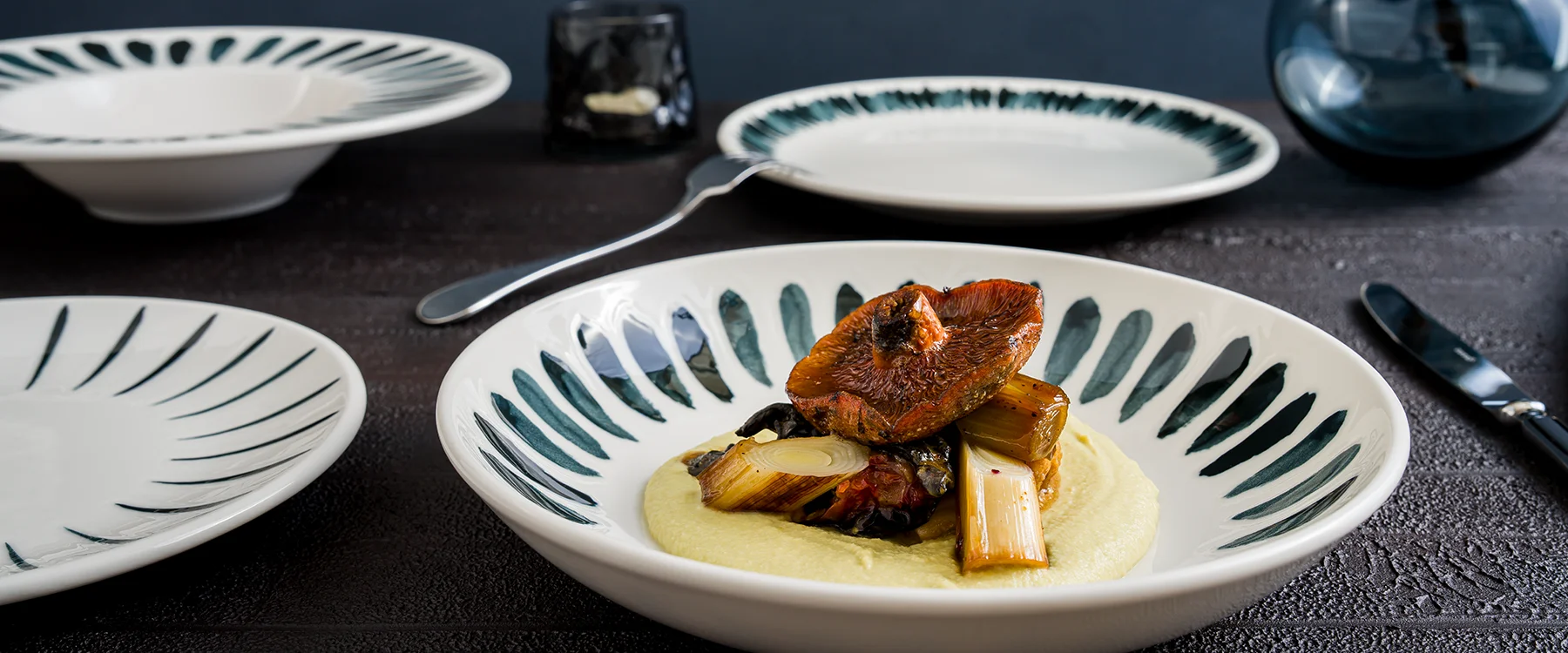
How many plates does a restaurant need? The answer depends on more than the number of seats. Count the pieces on tables, being plated in the kitchen and moving through the washing cycle at the same time. Then set a reserve that reflects peak service periods and supply conditions.
A good porcelain stock plan helps the chef maintain the chosen presentation throughout service. Serving a starter on the right plate, having the same form available for dessert and reordering by product code are all part of that plan.
Start by turning the menu into a product list
For each dish, record the porcelain collection, form, size and product code. Consider dishes that use the same plate together. Two different presentations may depend on the same stock item.
- Flat or deep plates for main courses
- Oval plates or small bowls for starters and sharing dishes
- Serving plates for desserts
- Cups and matching saucers for tea and coffee
Do not organise the list solely by course. A plate used for both starters and desserts may be needed for orders from different tables at the same time. Shared use only reduces stock requirements if pieces return quickly enough.
Calculate quantities at the busiest point of service
For each product code, observe how many pieces are in use at the same time during a busy service. Record plates on tables, plated dishes waiting in the kitchen and pieces that have not yet returned clean separately. Converting daily guest numbers directly into plate quantities overlooks the fact that a piece can be used several times a day.
A starting calculation combines pieces on tables and being plated with those being collected, washed and dried. Add the clean reserve selected by the restaurant.
An example calculation for main course plates
In a hypothetical restaurant at peak service, 60 plates are on tables, 18 are being plated in the kitchen and 32 are being collected or washed. The restaurant also chooses to set aside 20 clean plates for unexpected demand. The calculation for this scenario is 60 + 18 + 32 + 20 = 130 plates.
The 130 plates represent this example’s initial requirement, not a ratio for every restaurant. Recalculate if washing takes longer, the next seating starts earlier or demand rises for dishes using the same plate. If 100 undamaged plates are already available, the initial shortfall is 30. Confirm the order quantity against pack sizes and agreed supply conditions.
Consider collection choice alongside stock organisation
Different forms within a collection can help create a consistent presentation across the menu. Bonna’s Lavis Black collection, for example, includes flat and deep plates in different sizes, bowls and oval forms. Identifying which dish each form will serve helps avoid accumulating unused pieces.
Trial a sample during service before ordering a new form. Check how the plate works with the portion, carrying tray, washing rack and allocated shelf space. Assess stackability for each product. Do not stack different forms together simply because they belong to the same collection.
Manage reordering by product code
Counting only clean pieces on the shelf is not enough. Include undamaged pieces in service, in the kitchen and in the washing cycle in the total inventory. Record damaged pieces removed from use separately.
For each item, track the target quantity, current undamaged stock, pieces withdrawn from use, outstanding orders and confirmed delivery lead time. Keep pieces reserved for an event or menu change visible in the records. This prevents the same plate being allocated twice, to daily service and a banquet.
When setting a reorder point, consider expected losses during the delivery lead time and planned demand. Update the reserve using your own stock counts rather than applying the same percentage to every operation.
Frequently asked questions
Should you buy the same quantity of every plate type?
No. Main course, sharing and dessert plates may be used at different rates. Calculate quantities according to each product code’s role in the menu.
Does the lifetime edge chip warranty remove the need for spare stock?
No. Bonna’s warranty applies to selected products, and its scope should be checked for each product. A warranty does not replace the clean pieces needed during service.
Complete your porcelain selection with a plan that starts with the menu and is checked against the service cycle. Assessing the forms in Bonna’s collections against this list of needs makes presentation choices part of daily operations.